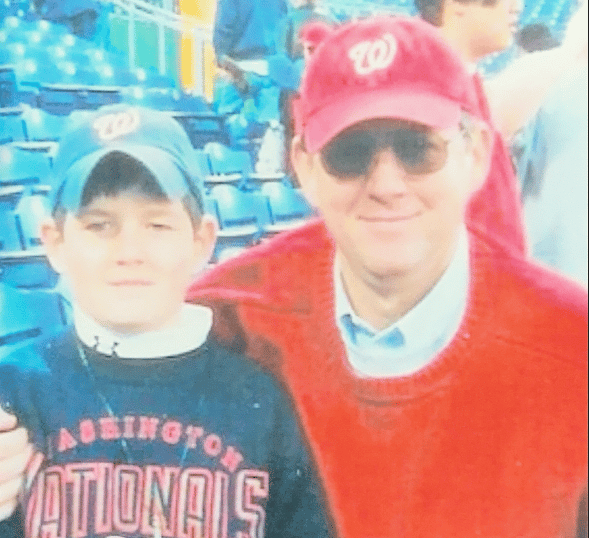
My dad was born in October of 1956 in Long Beach, California. His father, Hans Jurgen Schultz, was a German-born immigrant making his way up in the construction industry after earning an engineering degree from Cal Berkeley, among many other tales that have become something of folklore in my life.
The oldest of four boys born within five years, I imagine my dad grew up in a fairly competitive household. All four boys eventually grew to between 6’4 and 6’6, all played sports, and together they competitively raced my grandfather’s boat in the Chesapeake Bay.
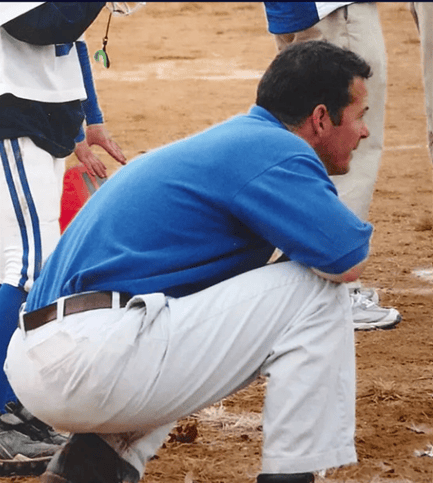
After an All-Conference basketball career at Herndon High School, their family having relocated to Northern Virginia when he was about seven, my dad went on to play at what was then known as Atlantic Christian College, now Barton College in Wilson, North Carolina. He later transferred to George Mason to be closer to home and even coached the JV squad the year he had to sit out due to his transfer.
I share this context because sports, and the competitive nature they bring, were clearly a major part of my dad’s early life and the importance of competition and being a good teammate were also central themes throughout my childhood.
After a lot of convincing with my mom, I started playing tackle football in the second grade for Maplewood, a storied program just a few blocks from our house. I played quarterback that first year on the Anklebiter C team. I think we completed one pass the entire season, but my dad got it on film and the reaction of the small crowd in attendance would have made you think the team invented fire instead of completing a five-yard forward pass.
To protect players, youth football is always tiered by weight limits. As a taller kid who went through some husky years in middle school, I consistently played on teams with kids a year or two older than me. As a result, my subpar and untrained quarterbacking skills did not cut it, and I played on the offensive line from grades three through six.
With some foresight, my dad believed I would eventually hit a growth spurt and grow out of my chubby fifth grade frame. He also thought my relatively decent arm from playing baseball might translate into playing quarterback again one day.
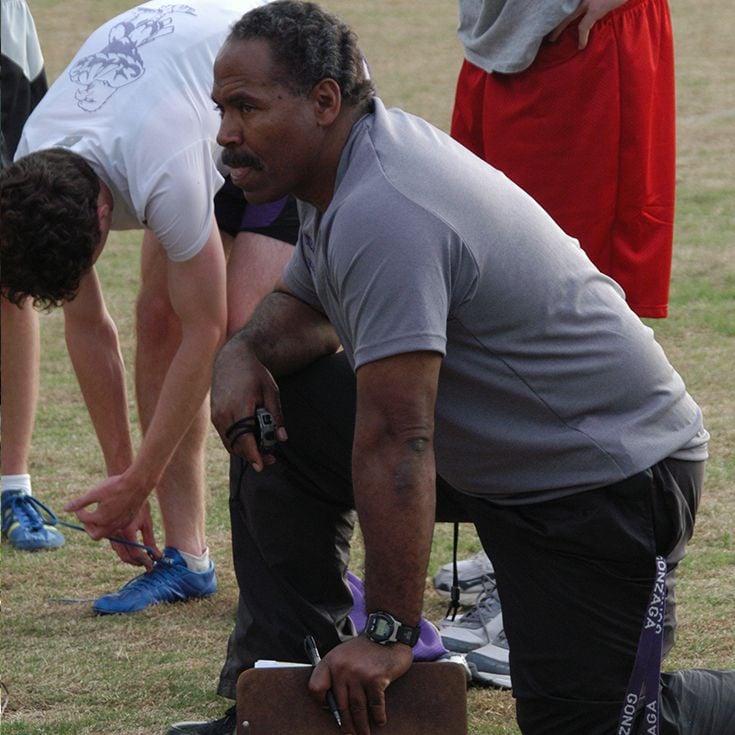
The summer going into seventh grade he told me he had found a QB training program out of Florida called The Quarterback Academy run by Darin Slack, who made it his life’s work to teach the proper mechanics of throwing a football while also instilling the leadership skills good quarterbacks require.
My dad told me he had signed me up for the Friday and Saturday sessions being hosted at Sparrow’s Point High School in Baltimore. I was furious.
I was perfectly content playing on the offensive line and, frankly, afraid of falling flat on my face trying quarterback again. I told him I would not go. Not to be hyperbolic, but his reply really did change my life:
“You owe it to your teammates to try.”
-Dad
The older I have gotten, the more I have come to appreciate my dad’s response to my initial refusal to attend that quarterback camp. After coaching youth and high school sports myself for several years after college, I have seen the modern sports landscape up close. I am afraid to report that many other father’s responses might have sounded more like, “The other quarterbacks suck! You’re the guy and should go get better for yourself,” or “I’ll film your training sessions and start an Instagram page to track your progress. We have to get colleges interested early!”
Instead, my dad’s message focused on the good of the team rather than the personal benefit of his son becoming the quarterback. Eventually, I agreed to attend with one condition: If I hated the Friday session, I would not have to return on Saturday.
I can still remember working through drills with Coach Slack while he and his staff walked up and down the line of young quarterbacks (I say quarterbacks but really I was a left guard trying to learn to throw a football). At one point he stopped behind me and started talking me through several mechanical details, from the position of my shoulder and elbow to releasing my wrist at the last possible second of the throw.
After several repetitions, it happened. The ball came out of my hand with a perfect spiral and accelerated straight into the hands of my throwing partner.
It is safe to say I agreed to come back on Saturday.
So why am I writing about this? Yes, it is a crucial part of my own story and my dad played a central role in it. But to me, the real lesson goes back to his justification for why I should attend the camp in the first place.
There are countless examples in our work lives of things we are scared of or simply hate doing that we still need the courage to attempt. Yes, there is risk in trying some of these things. But that risk does not compare to the guaranteed risk of staying in your comfort zone while the competition passes you by.
When my dad reframed the fear I had about trying something new as a way to better serve my teammates, he was teaching a lesson on sacrifice.
When we think about the sacrifices we make for the good of our family or our team, we often find a new motivation and the ability to carry a burden we might otherwise avoid if we were only thinking about ourselves.
So, I encourage you to think about the same lesson. Think of an area of your life or business where you can take on more responsibility. The thing you have been avoiding because of fear, apprehension, or laziness. Frame it as bettering yourself for the people around you rather than just for you and watch how your motivation changes.
If you fail, at least you tried something new and probably learned some valuable skills along the way. If you succeed, maybe it changes your life and the lives of those around you.
Either way, the lesson is still true:
“You owe it to your teammates to try.”
Bay to Beltway is the brother-and-sister real estate team of Christopher Schultz and Jennifer Gregorski at Washington Fine Properties. We serve buyers and sellers from inside the Capital Beltway to the shores of the Chesapeake Bay. If you’re considering buying or selling a home, or simply have a question about the local market, we'd love to be a resource.