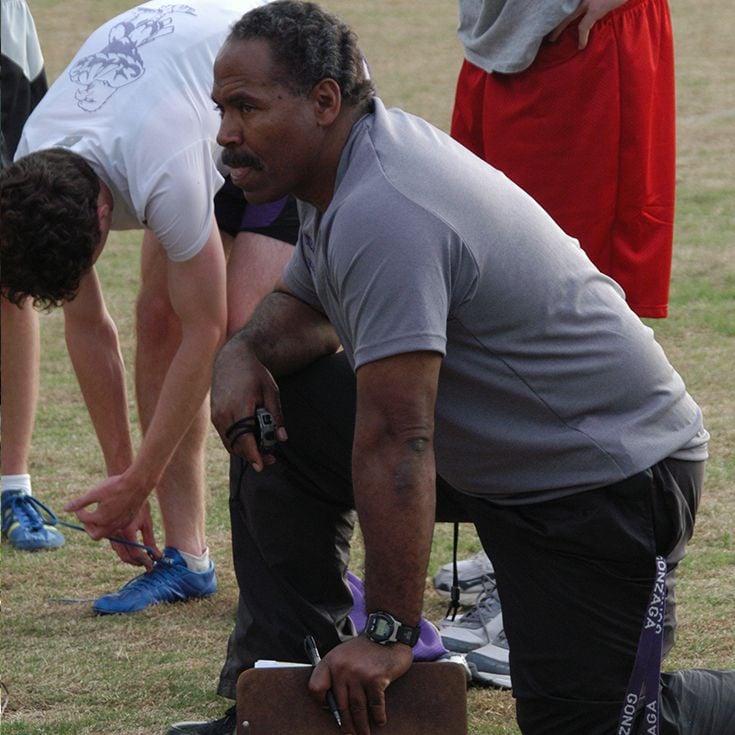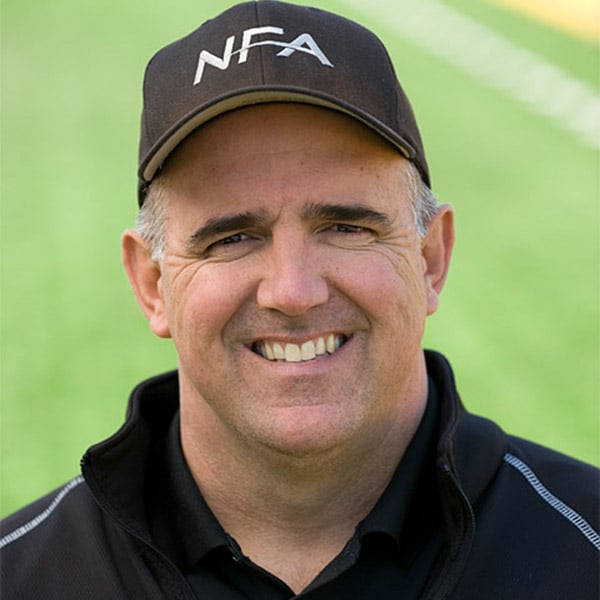
In June I wrote about my dad encouraging me to attend The Darin Slack Quarterback Academy during the summer of 2007. It only makes sense to follow that story with some reflection on the camp and more importantly, Darin Slack and his coaching itself.
For anyone who didn't read the first article, here's the quick version. After playing quarterback in 2nd grade, I spent grades 3-6 playing offensive and defensive line. My dad, standing at 6'6", was convinced I'd eventually hit a growth spurt and grow out of my chubby sixth-grade frame. He also thought my baseball arm might translate into playing quarterback again one day. Being the researcher he is, he found The Darin Slack Quarterback Academy based out of Florida.
Every summer, Coach Slack and his staff traveled the country putting on two-day immersion camps exclusively for quarterbacks. Looking back, one of the things I appreciate most wasn't just what they taught, it was how they taught it.
Group instruction is hard, if not impossible. Most large camps leave you feeling like just another kid in line with a number pinned to your chest. Coaches have different opinions, players receive conflicting advice, and everyone leaves trying to piece together what they heard and “learned”.
This was most definitely not the case at a Coach Slack camp.
Every member of Coach Slack's staff spoke the same language. There were acronyms, coaching cues, and drills for everything. You could tell they believed in one system, and every coach reinforced it the exact same way. A great example of this, is that my teammate at Bryant, Dalton Easton was also a ‘Coach Slack kid’. Standing in Rhode Island, a kid from Miami and a kid from D.C. could instantly speak the exact same language about throwing the football…and we did.
Back to the camp, I still remember spending what felt like an entire afternoon working on play-action mechanics from under center (do those still exist anymore??)
"SET! SHOW! SNAP! SELL!"
Echoed across the field as every single coach watched every single rep, stopping us to make the smallest corrections before sending us right back through the drill again.
The throwing mechanics we’re taught meticulously. Coach Slack had a name for the position of a thrower’s elbow called “zero”. This position was six inches forward of the shoulder and 45 degrees up and out. “Get to zero!” became something of a calling card of the Academy over the years and probably sounds insane to anyone who didn’t understand the context. The phrase “self correct, not self destruct” was also constantly mentioned referring to the need to understand what went wrong in a particular errant throw to be able to correct the next one.
As absolutely crucial as the throwing mechanic instructions were, that's not what has stayed with me the most over the last 20 years.
Throughout the camp, Coach Slack gathered the players and parents to talk about leadership. Okay, maybe ‘talk about leadership’ is underselling it a bit. Let’s say he preached about leadership in an impassioned way that sounded more like a Church sermon than a football camp talk. Right from the jump, you could tell Coach Slack believed wholeheartedly in the message he had crafted over a lifetime of playing, coaching, leading, and serving others.
Coach Slack would challenge every quarterback to pursue greatness, but he made it crystal clear that greatness comes at a cost. He explained greatness requires passion and that the root word of passion is passio.
Passio means suffering.
That was pretty heavy material for a chubby twelve-year-old who thought he was just showing up to learn how to throw a football, but man do I wish more people taught like that today.
Of all the sayings, acronyms, and coaching points from years of learning from Coach Slack, one has stuck with me more than any other:
"Be a thermostat, not a thermometer."
-Coach Darin Slack
Coach Slack's point was simple: A thermometer reacts to the environment around it, but a thermostat changes it.
As a quarterback, your job isn't to mirror the emotions of your teammates but to set the emotional temperature of the huddle. When things are going well, stay steady. When everything starts unraveling, stay even steadier.
Ironically, out of every coach's quote I've written about this year, this is absolutely the one I struggle with the most.
I've always been someone who wears my heart on my sleeve. There are times that's an advantage as people generally know where I stand. But there are just as many times when I wish I was better at regulating my own thermostat and keeping my emotions from rising with the temperature around me.
Over the years, I've realized this is one of the hardest parts of leadership.
Whether you're leading a football team, a business, or your family, people naturally take emotional cues from the person they're looking to for direction. While panic and frustration can spread rapidly, so can confidence.
Being a thermostat doesn't mean pretending everything is fine but it does mean choosing to be steady when everyone else is tempted to react. While it's a simple lesson, it doesn’t mean it’s easy.
“Be a thermostat, not a thermometer”
-Coach Darin Slack
P.S. - While the contents of this article are about Coach Slack, I want to also mention Coach Will Hewlett and Coach Dub Maddox. Both of them were young coaches when I first went to DSQA and both made absolutely undeniable positive impacts on my life.
Bay to Beltway is the brother-and-sister real estate team of Christopher Schultz and Jennifer Gregorski at Washington Fine Properties. We serve buyers and sellers from inside the Capital Beltway to the shores of the Chesapeake Bay. If you’re considering buying or selling a home, or simply have a question about the local market, we'd love to be a resource.